
We've watched two major shifts reshape commerce in the past century. First came catalogs and telephones; suddenly you could shop without leaving home. Then the internet arrived and browsers became our window into endless digital stores.
Agentic commerce adds another channel to digital shopping: AI agents that negotiate, discover and transact on behalf of buyers and sellers, working alongside traditional browsing for different types of purchases.
TL;DR:
Agentic commerce adds a new layer to digital commerce: Agentic commerce is when AI agents autonomously handle shopping tasks, from product discovery to checkout, for buyers and sellers
Discovery becomes intelligent and personalized: Agents understand intent and guide decisions, whether that's through ChatGPT handling routine purchases, on-site agents advising customers or B2B agents automating procurement
The multichannel future is multi-agent: Your commerce infrastructure must speak to AI agents across all touchpoints, such as external platforms and your own website
Agentic commerce: A new channel emerges
Shopping online can be exciting, but it can also be exhausting. Especially if you just need to buy the new knives for your robot mower, a spare part or a new replenishment.
Online shopping is full of friction, and everyone has tried to optimize every step of the journey. From fast search to one-click-checking. But shopping still entails a lot of clicks and loading of pages.
We've somehow accepted that this is what online shopping looks like. But there is a different way emerging.
Here's the simplest way to think about it: agentic commerce is when AI agents handle transactions from start to finish on behalf of people. But calling it "AI shopping" doesn't capture what's really happening. It entails much more than slapping a chatbot on your checkout page.
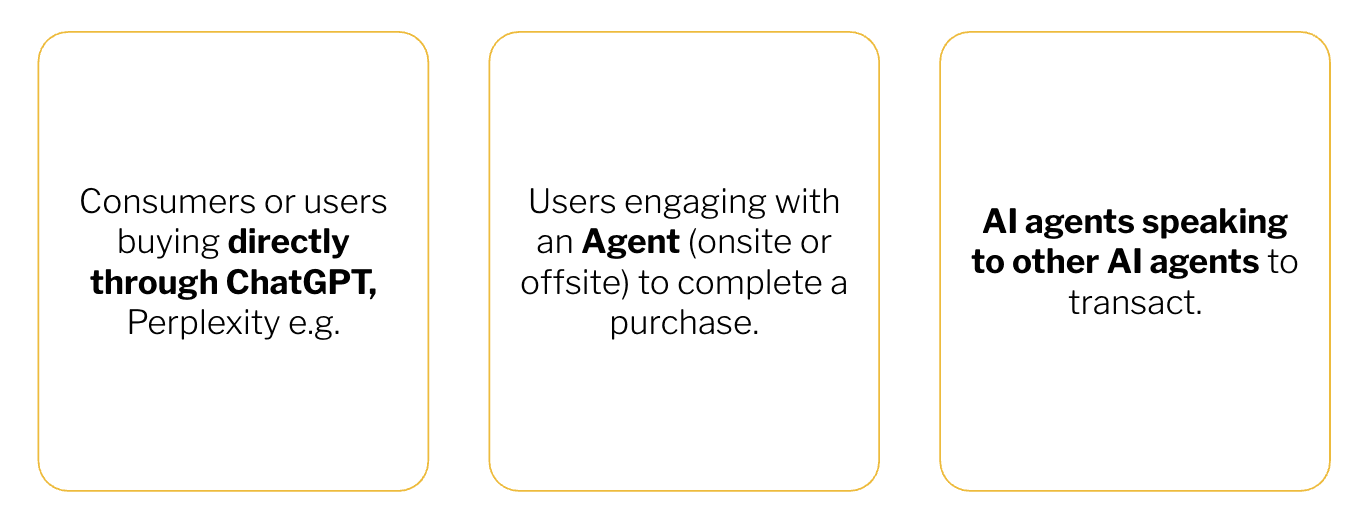
Agentic commerce shows up in multiple forms:
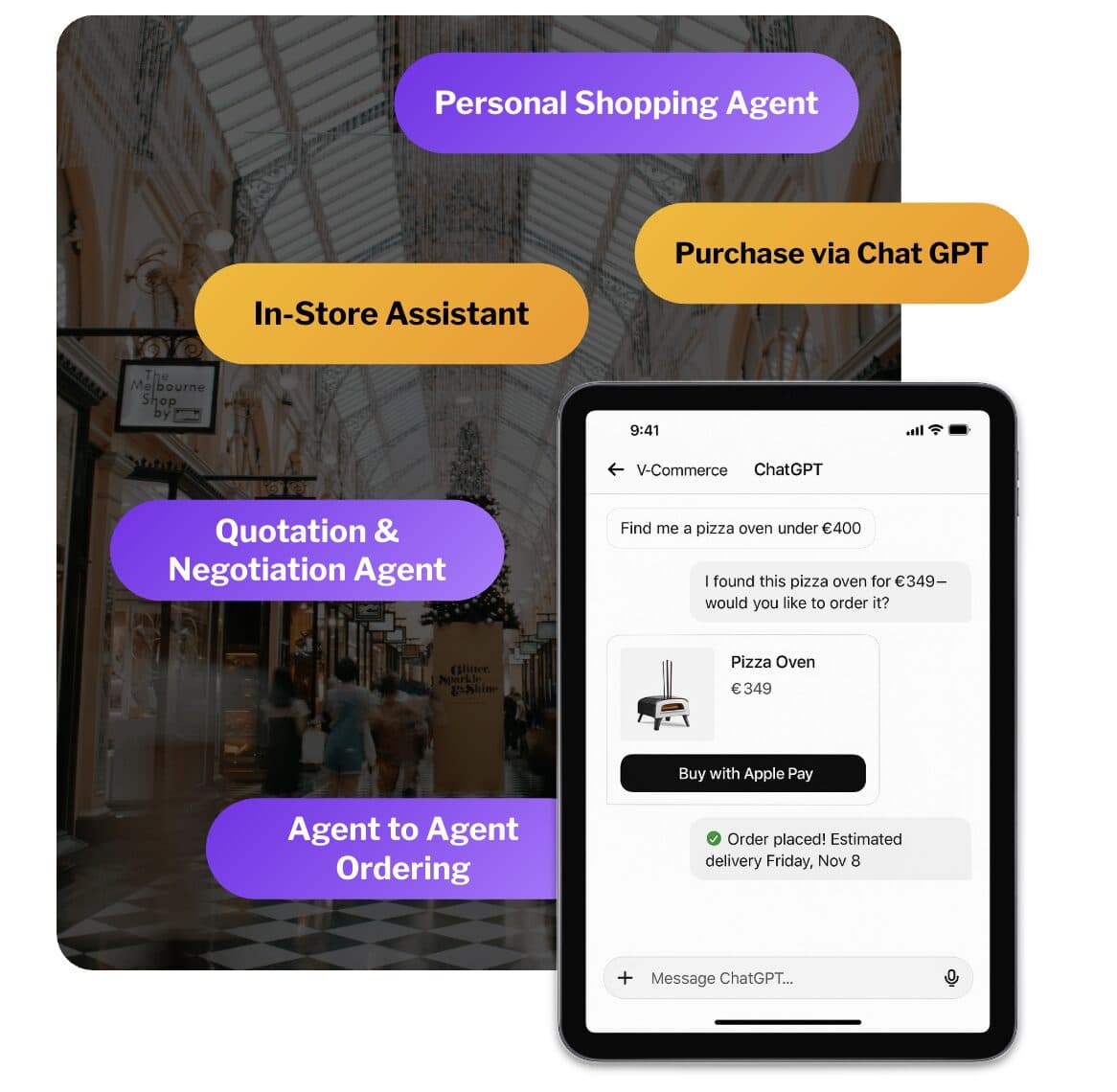
Platform agents, like ChatGPT, handling routine transactions
On-site agents on your website guiding customers through complex decisions, answering questions in real-time and personalizing the shopping experience
B2B agents that negotiate contracts, compare suppliers and automate procurement for businesses
The key to success lies in reimagining commercetools as a conversation between intelligent systems (one representing you, one representing your customer), working out the best deal for everyone involved.
In a way, we're going back to how commerce used to work. Before big-box retail, buying and selling was always conversational. A buyer and seller would talk, negotiate and find common ground. Agentic commerce brings that back, except now it's machines having those conversations at internet speed.
From search bars to actual conversations
Right now, shopping online takes a lot of effort if you want to get the full picture of what you’re buying. You bounce from Google to review sites to product pages, piecing together your own research, making decisions alone. You miss what made in-person shopping good, when someone who actually knew their stuff could point you toward exactly what you needed.
AI agents bring that back, but better and at scale.
Here's how it works: You tell your agent (maybe ChatGPT, maybe something else) what you need. Not just with keywords, but with actual intent. "I need running shoes for marathon training, and my knees have been killing me lately."
The agent gets it. It remembers your past purchases, knows your size, understands your preferences. And then something interesting happens.
The agent doesn't just scrape websites. It talks directly to seller agents, AI representatives from brands and retailers, to get real information. What's actually in stock right now? What's the real delivery time? Any deals available? Can the price move for a repeat customer?
This is negotiation happening in seconds. What would take you hours of research happens while you're still typing your request. Your agent's advocating for you while seller agents are trying to close the deal.
You just see the result: "Found three options that work for your needs. Given your knee issues and training schedule, I'd go with this one. It’s in stock, gets delivered tomorrow, and I got you free expedited shipping."
Watch this video to understand how agentic commerce looks from the consumer's point of view:
Where agentic commerce fits in the shopping journey
As you can imagine, many aren’t going to buy their next luxury watch or designer bag purely through an AI agent. When you're making a significant purchase, you want the full experience. You want to see beautiful product imagery, watch videos, get inspired by styling suggestions, compare options side by side, maybe even visit a store.
Agentic commerce works best for:
Routine replenishment: Reordering household supplies and groceries
Functional purchases: Buying a new phone charger, printer paper, basic clothing items
Research-heavy decisions: Where an agent can do the legwork comparing specs, reading reviews, checking compatibility
Think of it as adding a new channel to your commerce strategy, just like you added social commerce, marketplace selling, and in-store experiences. Each channel serves different needs. Agentic commerce handles the practical, the routine, the research-intensive—freeing up the traditional web experience to focus on inspiration, discovery, and emotional connection.
When agents become advisors
Intelligence is at the core of agentic commerce.
Because these agents remember everything, they know you buy organic when you can, that you're careful about spending on everyday stuff but will pay more for good electronics, that sustainability matters to you.
Over time, your agent stops being a tool and becomes more like a trusted advisor. You start delegating more, especially the boring stuff. The agent doesn't wait for you to ask—it suggests reorders, finds better alternatives, optimizes your spending without needing your constant input.
For businesses, this is both exciting and a little scary.
Your products aren't competing for clicks on a search page anymore. They're being evaluated by intelligent systems that can compare everything across every option simultaneously. The agent remembers every interaction with your brand. It knows if you've had stock issues, if your deliveries run late, if your pricing holds up against competitors.
Brand loyalty looks different, too. With agentic commerce, businesses aren’t building relationships with individual customers. Rather, they’re building reputation with the agents representing them. One bad experience gets logged and factored into potentially thousands of future decisions.
Building for a multi-agent world
Agentic commerce requires rethinking how commerce infrastructure actually works.
The web was designed for humans looking at screens. E-commerce platforms were built to serve web pages, track browser sessions, count clicks. AI agents, on the other hand, don't browse. They communicate through structured data.
This is why everyone's suddenly talking about Headless commerce, for example. It's not a tech trend anymore. It's table stakes for existing in the agentic economy. If your commerce capabilities aren't accessible through clean APIs, you're invisible to AI agents. Full stop.
But having an API isn't enough on its own. New standards are emerging for how agents talk to each other. Protocols like Model Context Protocol and Agent2Agent are creating common languages so any buyer agent can work with any seller agent, regardless of what platform or tech stack they're running on.
Think of it like the shift from websites to web services, but bigger. Your "storefront" becomes a network of agents, intelligent representatives that can negotiate, answer questions, check inventory, and close deals on their own. These agents plug into your inventory, pricing, and order systems internally, while talking to buyer agents through open protocols.
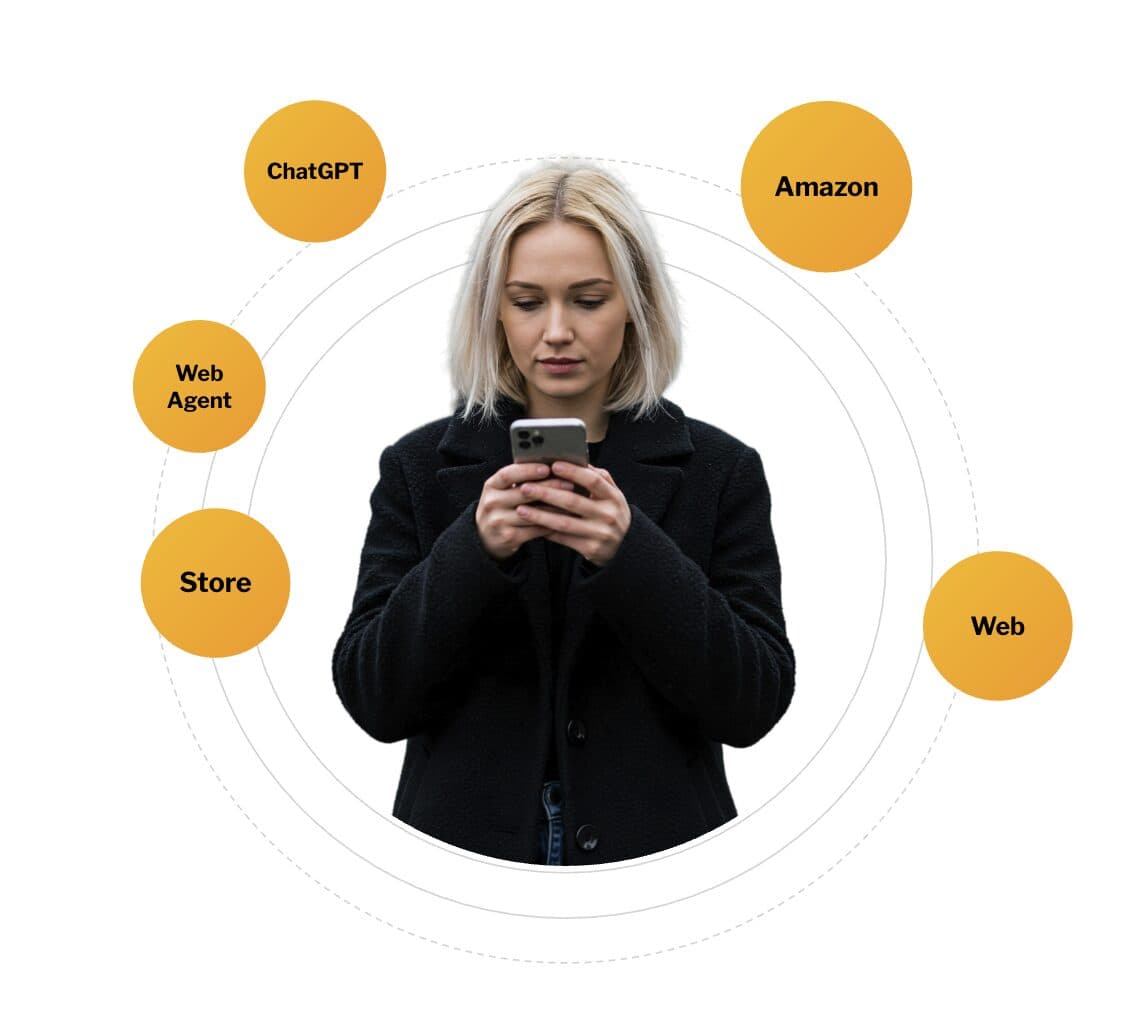
The multichannel future isn't about having a website, an app, and being on Amazon. For businesses that want to be ready for agentic commerce, it means having agents that can transact wherever buyer agents show up, and having the infrastructure to support both traditional browsing for high-consideration purchases and agentic transactions for everything else. When someone asks ChatGPT to buy something, your seller agent needs to be there, trustworthy, and ready to complete that transaction seamlessly.
What this means for you
Marketing teams
For marketing teams, it’s important to remember that customer acquisition is about to look completely different. Performance marketing as we know it, including bidding on keywords, testing ad creative, driving traffic to landing pages, remains crucial for high-consideration purchases where inspiration and visual discovery matter. But you're adding a new dimension: building trust with AI agents that influence routine and functional buying decisions.
Your strategy becomes multi-layered. Beautiful brand experiences and compelling content still drive emotional purchases. But for agentic transactions, operational excellence becomes your competitive edge. Does your agent give accurate information? Can you deliver on what you promise? Is your inventory data actually reliable? These operational metrics now determine market share in the agentic channel.
Technical teams
For technical teams, the shift is real but manageable if you start now. The companies winning five years from now will be the ones that went headless today, built API-first architectures, exposed their commerce capabilities to agents early.
But you can't wait for perfect standards. The ecosystem's evolving too fast, and the early movers are defining how it works. Start with internal AI workers handling repetitive tasks. This builds confidence in working with AI agents while making your operations better.
Then expose your capabilities so agents can discover and use your commerce functions. Build seller agents that can represent your business across different contexts, working with platform agents like ChatGPT, powering intelligent experiences on your own site, and handling B2B negotiations. Test everything in sandbox environments before real buyer agents start knocking.
Opportunities with agentic commerce
This moment feels like the early internet, when businesses were still figuring out if they even needed websites. The ones that jumped in early, experimented, learned became the e-commerce leaders.
We're there again, but the clock's ticking faster. Agentic commerce is arriving quicker than any previous tech shift. The infrastructure's coming together, buyer agents are getting smarter, and autonomous transactions are already happening.
The opportunity is to create in this new space, building for a future where traditional web experiences and agentic transactions work hand in hand. Not follow best practices after everyone else figures them out, but be a pioneer defining what's possible. To imagine how your brand, your products, your customer relationships can work when AI agents become another major interface alongside your website, app, and physical stores.
This takes a mindset shift. Commerce isn't just about web pages and conversion funnels anymore, but it's also not about abandoning them. It's about conversations and trust working alongside visual inspiration and discovery. Building agents that represent your business well across every touchpoint, while maintaining the beautiful, inspirational experiences that drive emotional purchases. Building infrastructure flexible enough to evolve as the ecosystem does.
The winners won't be the ones with the biggest ad budgets or flashiest websites alone. They'll be the ones with the smartest agents, the cleanest APIs, and the deepest understanding of how autonomous commerce actually works alongside traditional shopping experiences.
Ready to get started with agentic commerce?
You don't need to flip a switch and transform everything tomorrow. Start small: look at your current infrastructure, figure out what needs API access, build your first AI worker for a backend task.
But do start. The wave is building, and the businesses that are ready will capture outsized value.
Agentic commerce isn't some far-off future. It's happening now.
Want to explore what agentic commerce means for your business, and learn what it takes to prepare?
Vaimo is working with organizations that see where this is heading, helping them navigate everything from API enablement to building sophisticated agentic workers across all touchpoints.
Let's talk about how we can guide your journey into the multi-agent economy.