
The real cost of multiple frontends
Most organizations with multiple backend systems build separate frontends for each one. Shopify in one market, commercetools in another, legacy systems and different CMSs.
This creates duplication across multiple codebases and teams, with deployment processes that operate independently of each other. Changes happen in isolation instead of once, marketing waits on coordination and what should be a simple update becomes a project.
How Nexus unifies multiple backends
Nexus approaches this differently. Instead of separate frontends, you build one orchestration layer that speaks to all your backends through a connector interface.
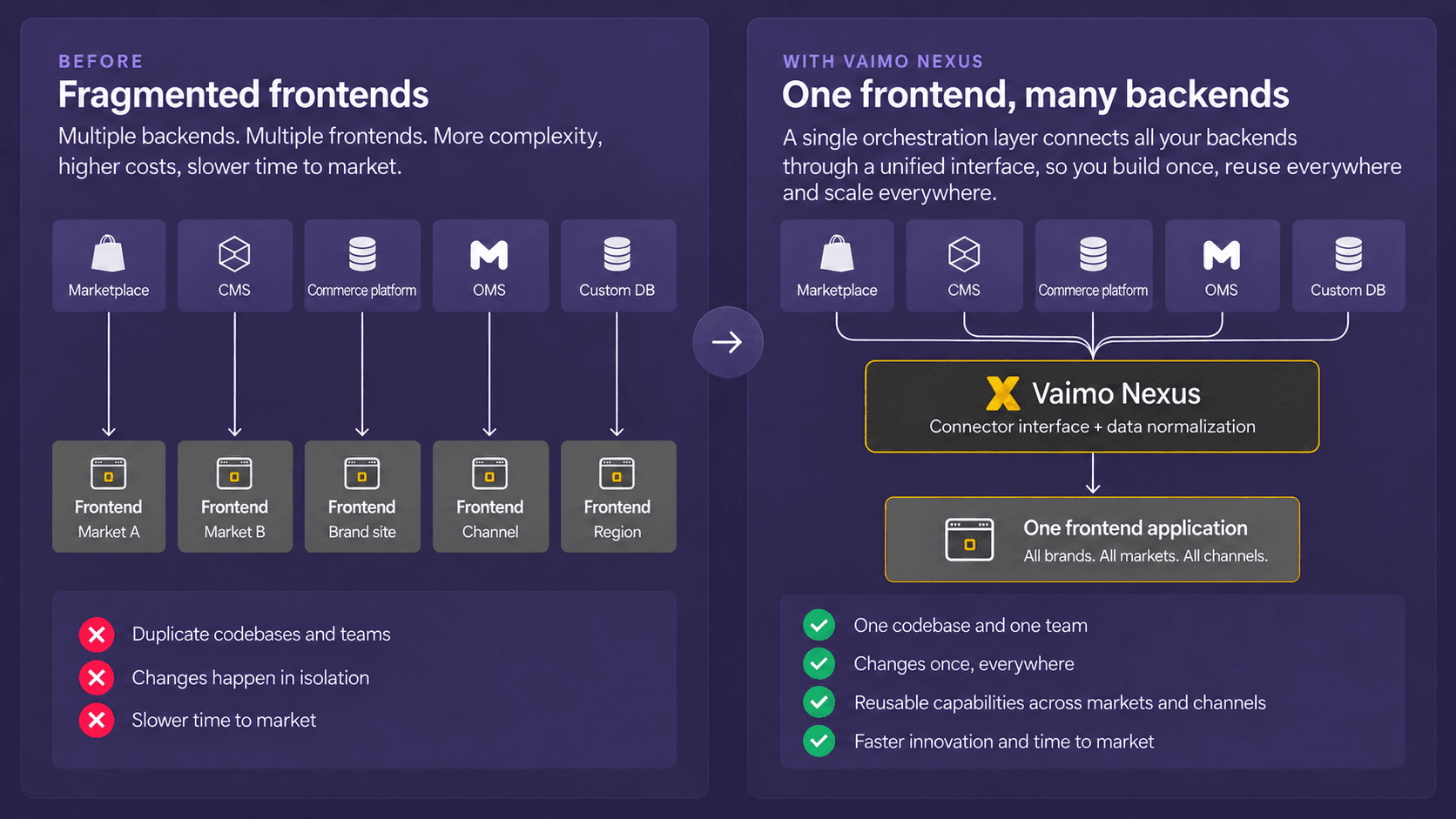
Shopify, Commercetools, your legacy systems, multiple CMS platforms, they all connect to Nexus. The connector layer normalizes their differences into one consistent data model. Your developers write features once and a checkout flow operates identically whether it pulls from Shopify or Commercetools. Personalization rules apply uniformly and analytics capture behavior consistently.
One team maintains one codebase with one deployment path. Changes to how you orchestrate data, render experiences or collect insights happen in one place and propagate immediately everywhere.
Why this matters
The typical project cycle shrinks noticeably. Marketing and product teams innovate without waiting on IT coordination across systems. You personalize at scale because the experience layer is unified even when backends remain separate. When you need to launch new channels or enter new markets, you don't rebuild standard journeys from scratch.
For organizations running multiple brands, markets or channels, this changes how you operate. You maintain system diversity where it matters but gain the speed and consistency of unified digital experience architecture.
Your backend systems stay intact, you're not consolidating infrastructure. Instead you're adding an intelligent orchestration layer on top that removes the friction between fragmented systems and customer experience that actually works.